
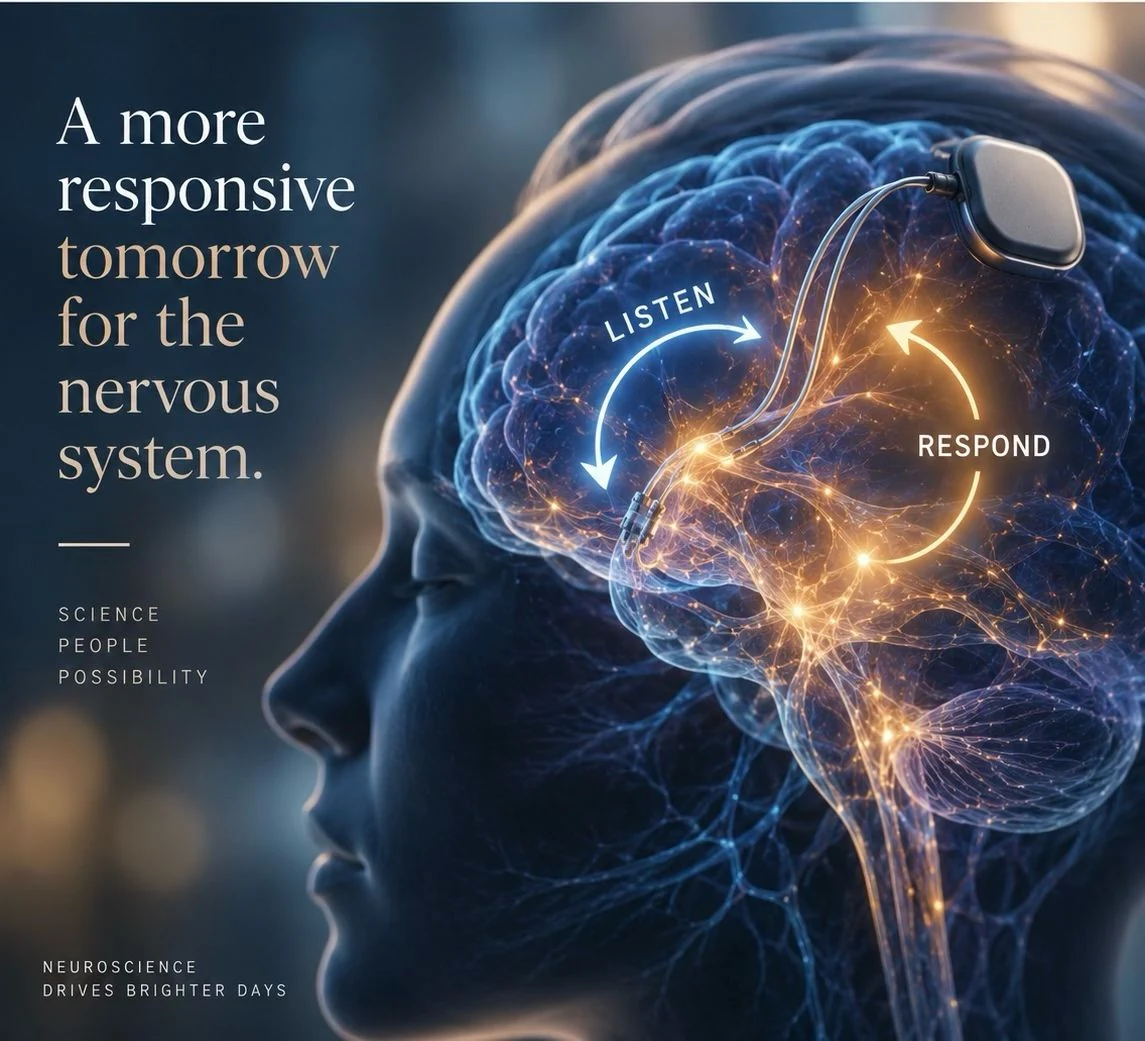
What if the next generation of neurostimulators doesn’t just stimulate, but listens?
That’s one of the developments in neuroscience I find most exciting.
Most of my experience has been in neuroscience, so I’m always excited to see where neurotechnology is headed next.
Traditional neuromodulation has largely focused on delivering stimulation according to programmed parameters.
Closed-loop systems change the equation.
Sense the physiologic signal.
Interpret it.
Deliver therapy.
Measure the response.
Adapt.
The potential is significant: more personalized stimulation, less unnecessary stimulation, and therapy that responds to what is actually happening in the nervous system.
But it also creates a fascinating development and regulatory challenge.
The biomarker, sensor, algorithm and stimulation are no longer independent pieces. The performance of the therapy depends on the entire loop.
So the question becomes more than: “Does the device stimulate safely?”
It becomes: “Can we trust the device to know when, why and how to stimulate?”
That’s where I think neuromodulation gets really interesting.
For those working in neuroscience and neurotechnology: what advancement do you think will have the biggest impact over the next decade?
Let’s connect these ideas
to your next milestone.
Schedule time with Strata to discuss your device, priorities, and questions.
Schedule an intro callEducational content only. No company-specific regulatory or legal advice.