
If human factors first enters the conversation when you’re planning your usability validation study, you may already be thinking about it too late.
FDA’s new human factors guidance is now in effect — and there’s an important takeaway for medical device startups.
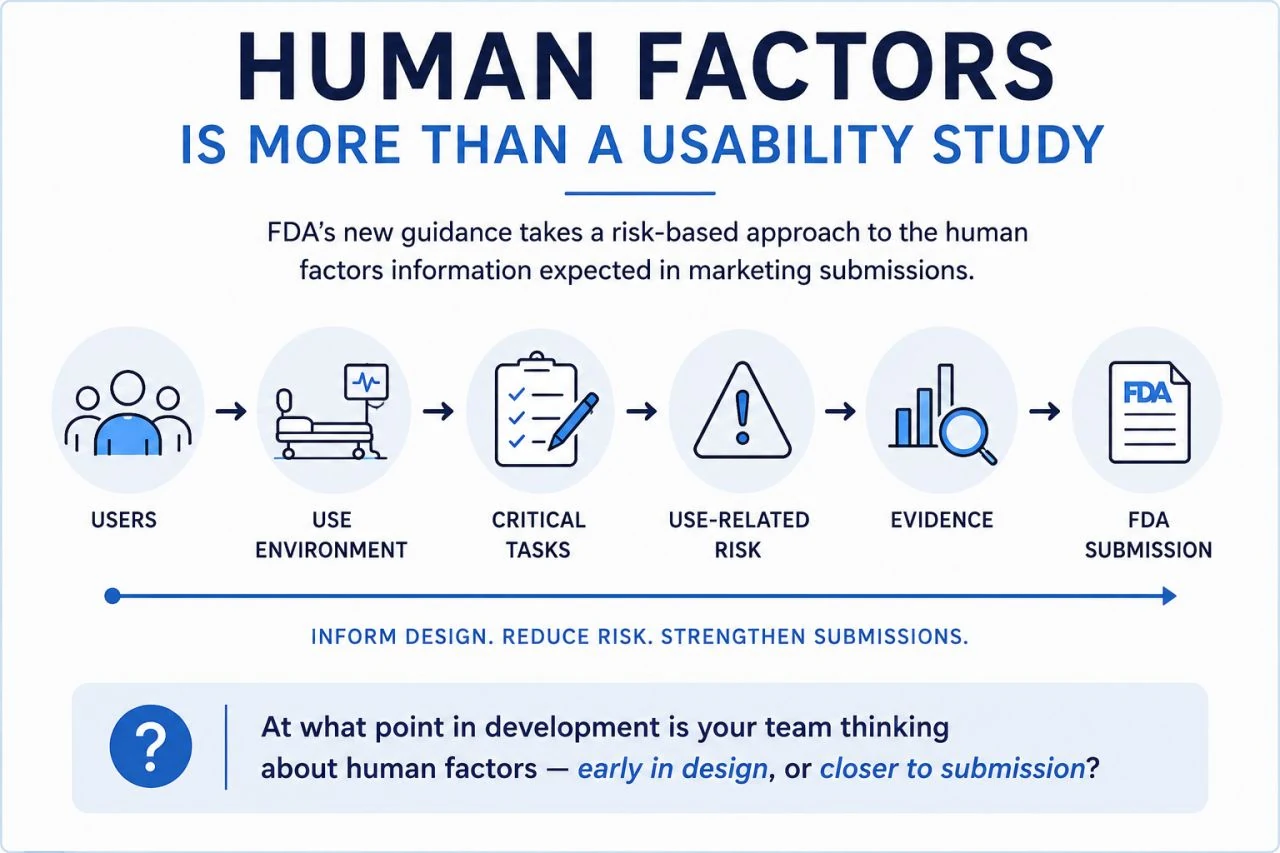
Human factors is not just about running a usability study before submission.
FDA’s new guidance establishes a risk-based framework for determining what human factors information should actually be included in a 510(k), De Novo, PMA, or HDE submission.
Depending on the device and its use-related risk, that may range from a relatively limited human factors rationale to much more extensive documentation and validation data.
For early-stage companies, the practical takeaway is simple:
Don’t wait until submission planning to think about human factors.
Your intended users, use environment, user interface, critical tasks, and use-related risks are being shaped while the product is being designed.
Understanding the likely FDA expectations early can help teams build the right evidence along the way — rather than discovering late in development that additional human factors work is needed.
Another example of why regulatory strategy and product development should start together, not meet at the finish line.
Will FDA’s new risk-based framework change when or how your team approaches human factors?
Let’s connect these ideas
to your next milestone.
Schedule time with Strata to discuss your device, priorities, and questions.
Schedule an intro callEducational content only. No company-specific regulatory or legal advice.